
DEEP CLEANING IN NAIROBI: A ROOM-BY-ROOM GUIDE FOR KENYAN HOMES
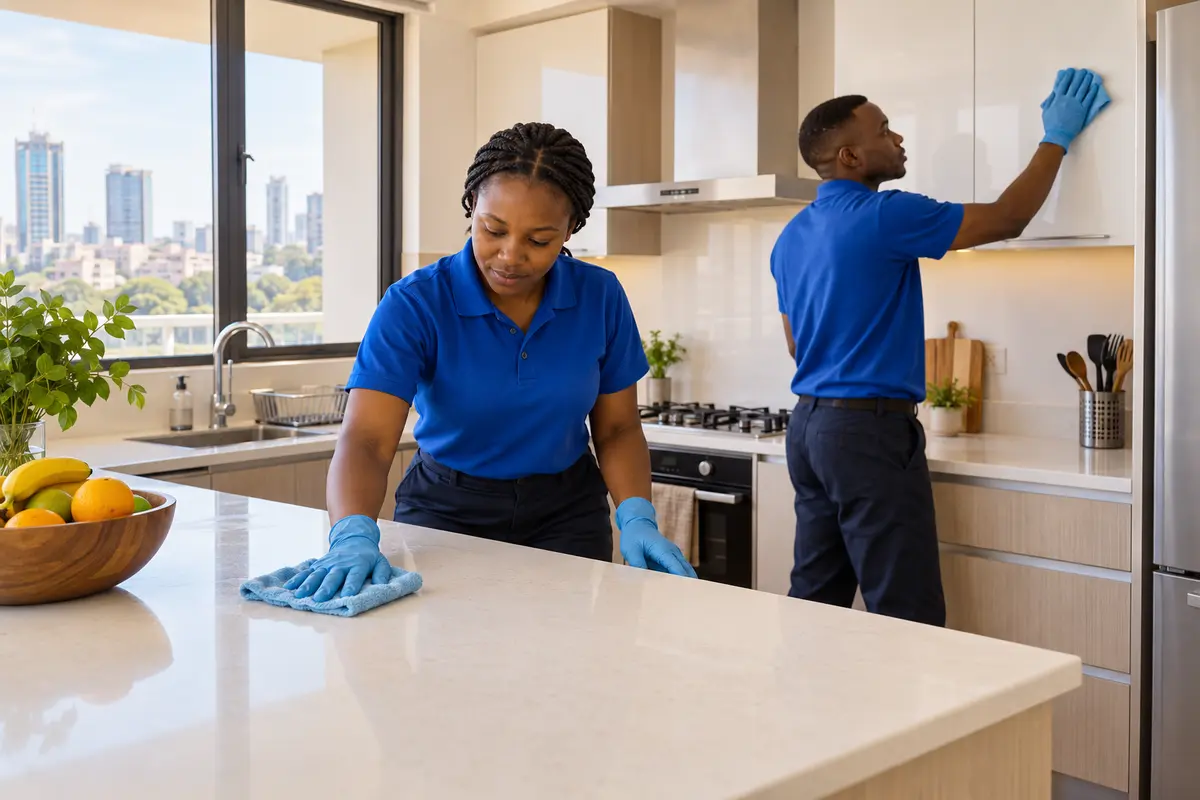
A home can look tidy and still have grease on cupboard handles, soap buildup around taps and dust along window tracks. If a quick mop and wipe no longer leaves your apartment feeling properly refreshed, deep cleaning in Nairobi may be the next useful step. The right service starts with an agreed checklist for your actual home.
This guide is for Kenyan homeowners, tenants and landlords comparing routine upkeep with a more detailed clean. Whether you live in an apartment in Kilimani, a family home in Ruaka or a maisonette along Langata Road, the important questions are the same: what needs attention, which surfaces require care, and what is included in the quotation?
What is the difference between routine and deep cleaning?
Routine cleaning keeps a reasonably maintained home presentable between visits. It typically focuses on accessible dusting, kitchen and bathroom surfaces, waste removal and floors. Its purpose is to keep everyday mess from building up.
Deep cleaning gives more time and attention to accumulated dirt and agreed detail work: kitchen grease, bathroom buildup, edges, doors, skirting and accessible tracks. It does not automatically include every surface, appliance interior or specialist treatment. The checklist should identify those tasks individually.
| Area | Routine upkeep | Possible deep-clean detail |
|---|---|---|
| Kitchen | Accessible worktops, sink and fronts | Greasy edges, handles and agreed emptied cupboards |
| Bathroom | Toilet, basin, shower surfaces and floor | Assessed soap buildup, fittings, edges and detailed glass |
| Living spaces | Reachable dusting and floors | Skirting, door frames and accessible furniture edges |
| Windows | Only if included in your checklist | Agreed reachable panes, sides, sills and tracks |
These examples explain the difference in scope; they are not a promise that every listed task is included in every booking. Review your own checklist before confirming.
When does a Nairobi home need a deeper clean?
Look at condition rather than choosing a service from the number of bedrooms alone. A compact occupied studio with kitchen grease and limited furniture access may need more detail than a larger home that receives consistent upkeep.
- Kitchen fronts feel sticky even after a normal wipe.
- Shower glass, taps or bathroom edges have visible buildup.
- Dust collects around accessible tracks, skirting and door frames.
- You are preparing for visitors, returning after a long absence or resetting a neglected space.
- You are moving into a property whose recent cleaning history is unclear.
For a vacant handover, ask about move-in and after-tenancy cleaning. After sanding, painting or construction, request post-construction cleaning so the assessment accounts for residue and fresh finishes. Construction cleaning requires a different discussion from an ordinary household deep clean.
A room-by-room deep cleaning checklist
Kitchen: deal with the details that collect grease
Begin with worktops, the sink, splashback and accessible appliance exteriors. Identify cupboard handles, door edges and areas around cooking equipment that need extra attention. Tell the team about natural stone, coated cabinetry or delicate fittings so the proposed method can be checked.
Empty cupboards if their interiors are included. Ask separately about oven interiors, extractor filters, fridge interiors and moving appliances. Food storage, electrical connections and appliance care instructions can affect what is practical. A cupboard full of utensils cannot be cleaned internally to the same standard as an emptied one.
Bathrooms: inspect buildup and surface condition
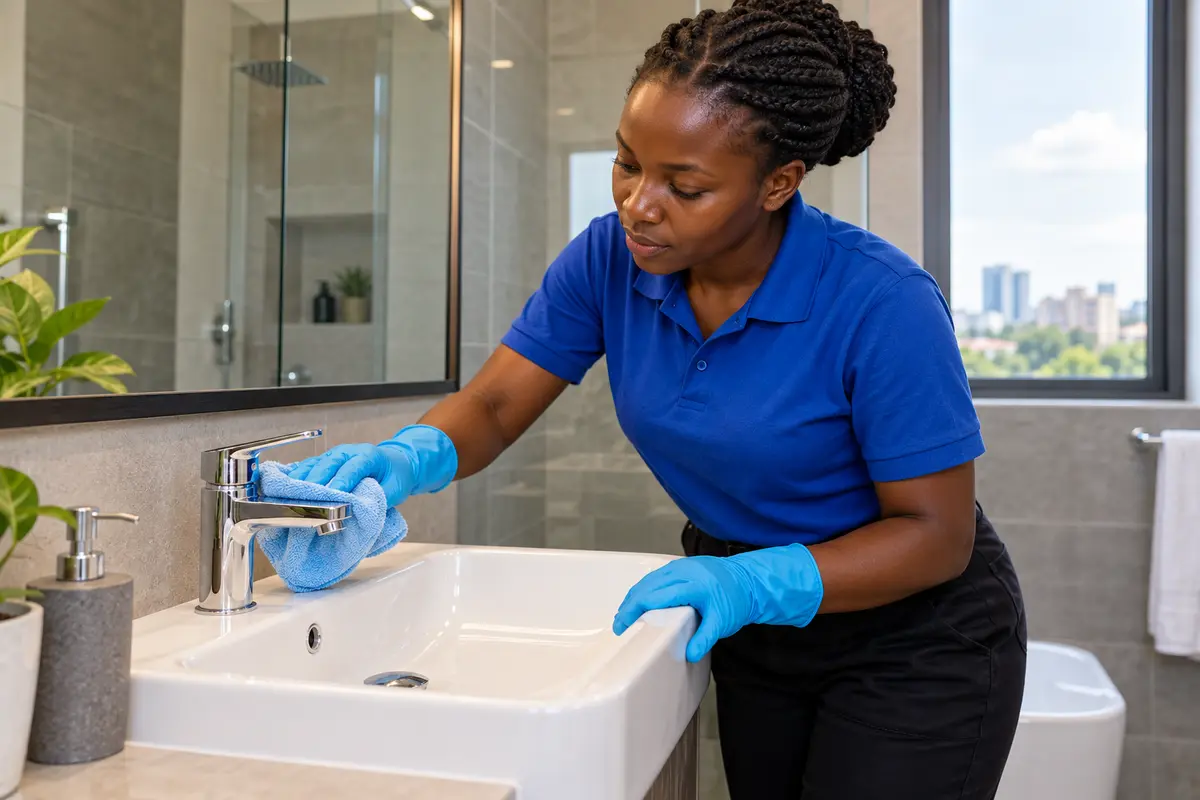
Discuss the toilet, basin, shower, taps, floor edges and accessible glass. Point out existing chips, worn sealant, damaged grout or persistent drainage smells. Cleaning may improve surface dirt; it cannot repair a leaking pipe, replace sealant or reverse etched glass.
A strong fragrance is not proof of a better clean. Suitable products, careful work and an agreed inspection are more useful. Heavy staining or recurring damp patches should be assessed before anyone promises a result.
Bedrooms and living rooms: make access part of the plan
List reachable shelves, door frames, skirting, switches and the floors around furniture. Clear personal items, cables and fragile decorations before the visit. Agree which lightweight items can be moved and which heavy or fitted pieces will remain in place.
Dusting a sofa is different from upholstery extraction. Likewise, bed making does not mean that mattress treatment, duvet washing or curtain cleaning is included. Use the upholstery, curtains and linen service to discuss fabrics, care labels and separately quoted work.
Windows, balconies and entrance areas
Specify the number of panes, the cleaning sides and whether tracks and frames are included. In an upper-floor apartment, safe access determines which exterior surfaces can be reached. High-access equipment and exterior work need separate assessment.
For a balcony or entrance exposed to dust or muddy shoes, agree how debris, water and waste will be managed. Building rules, drainage and neighbouring balconies matter. Avoid assuming that a household deep clean includes pressure washing.
Cleaning and disinfecting are different tasks
Cleaning removes dirt and impurities; disinfecting uses an appropriate product to kill remaining germs. Choose any additional disinfection according to the circumstances and the product instructions. Follow product labels, use ventilation, allow the stated contact time where disinfection is required, and never mix cleaning chemicals.
These are product-use principles, not a claim that a deep clean sterilises a home. Tell the team about relevant sensitivities and any specific requirements before the visit.
Plan your visit around the property
In Nairobi, booking arrangements can be as important as the checklist. Confirm the estate or apartment name, the correct gate, parking, lift availability and any management approval. Arrange water, electricity and keys where required for the agreed work. Explain access restrictions when requesting the quote.
If laundry or upholstery is involved, discuss drying conditions and when the space needs to be used again. Avoid scheduling important visitors immediately after work whose drying time is uncertain. If contractors are still sanding or painting, coordinate the finishing clean after those activities.
Photographs help show buildup and unusual surfaces, but do not always replace an inspection. Send clear pictures of the kitchen, bathrooms, floors and problem areas, together with the approximate floor area and whether the home is occupied or empty.
How much does deep cleaning in Nairobi cost?
GNA Cleaning publishes indicative home deep-clean ranges, including KSh 4,500–6,500 for a one-bedroom home and KSh 6,500–9,000 for a two-bedroom home. These are planning guides for the scope described on our cleaning prices page, not fixed quotations for every property.
The actual size, bathrooms, dirt buildup, furniture access, finishes and requested tasks affect the quote. Confirm products, equipment, transport, applicable taxes and any minimum charge. Upholstery, curtains, linen, difficult access and specialist residue removal may require separate pricing.
When comparing proposals, compare the same checklist. A lower total that excludes windows or cupboard interiors may cover less work. Ask for the total payable and the exclusions in writing so you can make a clear decision.
How often should you arrange a deep clean?
There is no single timetable for every Kenyan home. Use routine visits to maintain the areas you use most, then reassess detailed tasks when visible buildup returns. Occupancy, cooking habits, pets, surrounding works and how consistently the home is maintained all change the workload.
For example, an occupied family apartment may prioritise kitchen and bathroom detail, while an empty property before occupation may need cupboards and accessible tracks. Choose the work that solves the present condition instead of paying for a label alone.
Common questions before booking
Can I stay at home during the clean?
Discuss this when booking. The team needs safe access to the agreed rooms, and some work may temporarily restrict their use. Arrange a separate place for children, pets and valuables as appropriate.
Will all stains disappear?
Results depend on the material, stain, age and existing damage. Ask the team to assess difficult marks. Permanent discolouration, corrosion or damaged finishes may remain after suitable cleaning.
Does deep cleaning include pest treatment?
No. Pest management involves a separate assessment and agreed treatment. Tell us about suspected pest activity before the visit so cleaning and any other work can be coordinated.
Do you serve areas outside Nairobi?
GNA Cleaning accepts enquiries for Nairobi and Environs, Kisumu, Mombasa Coastline, Lamu and Meru. Service availability, access and any transport costs are confirmed with the quotation. View our service areas and share your exact location.
Kenyan source acknowledged: Ministry of Health — Epuka Uchafu, Afya Nyumbani household hygiene initiative. The Ministry’s local context includes household hygiene, safe water handling, waste management and sanitation. The room-by-room checklist above is GNA Cleaning’s practical service guide.
Choose the clean your home actually needs
Talk to our professional team about your location, property size, condition and priorities. We will help you agree a useful checklist and a clear quotation before booking.
Talk to our professional team ↗